This visit remains etched in my memory for the worst possible reason. It was the day I almost lost my life.
The incident occurred during a site visit to the Upper Seti Hydropower Project, located about 20 km north of Pokhara. What should have been a routine field assignment turned into a near-fatal experience.
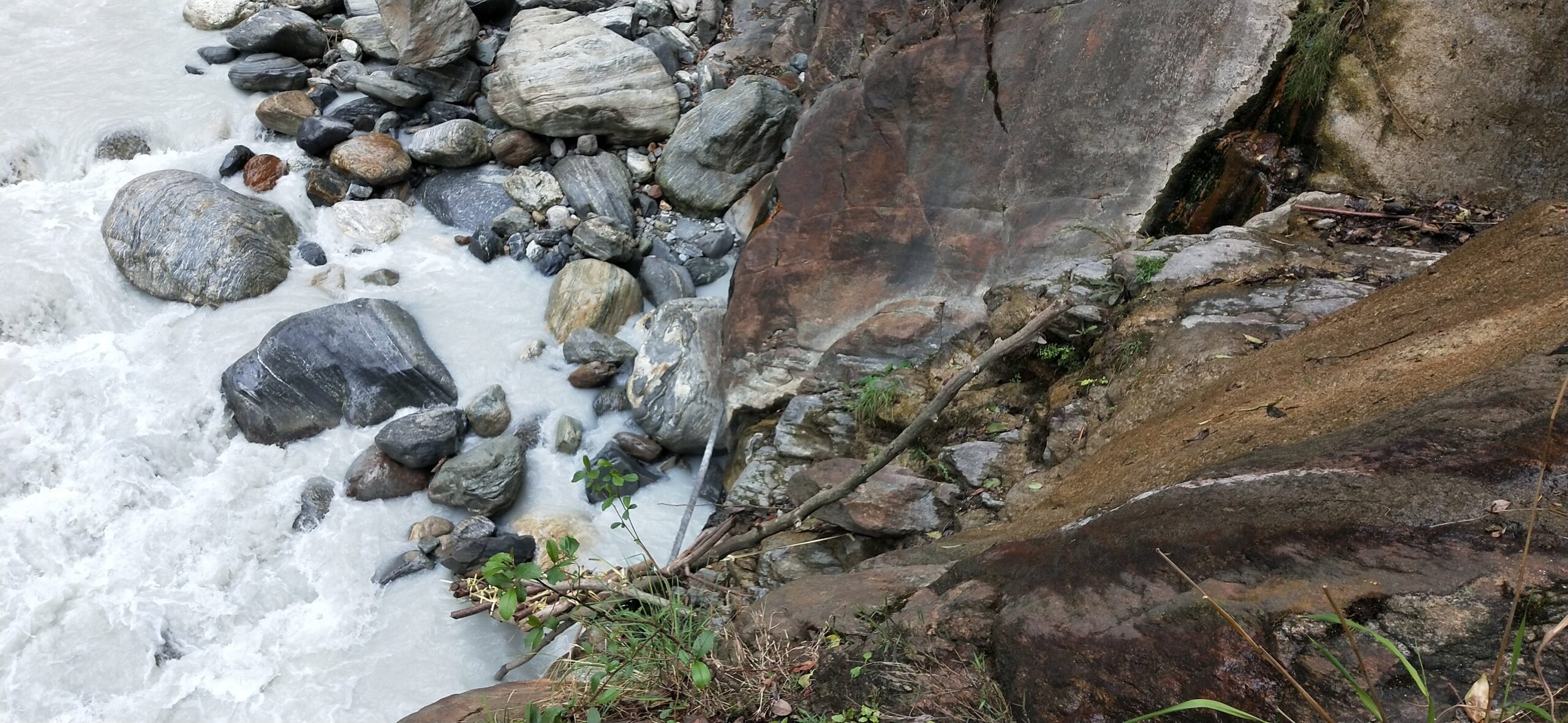
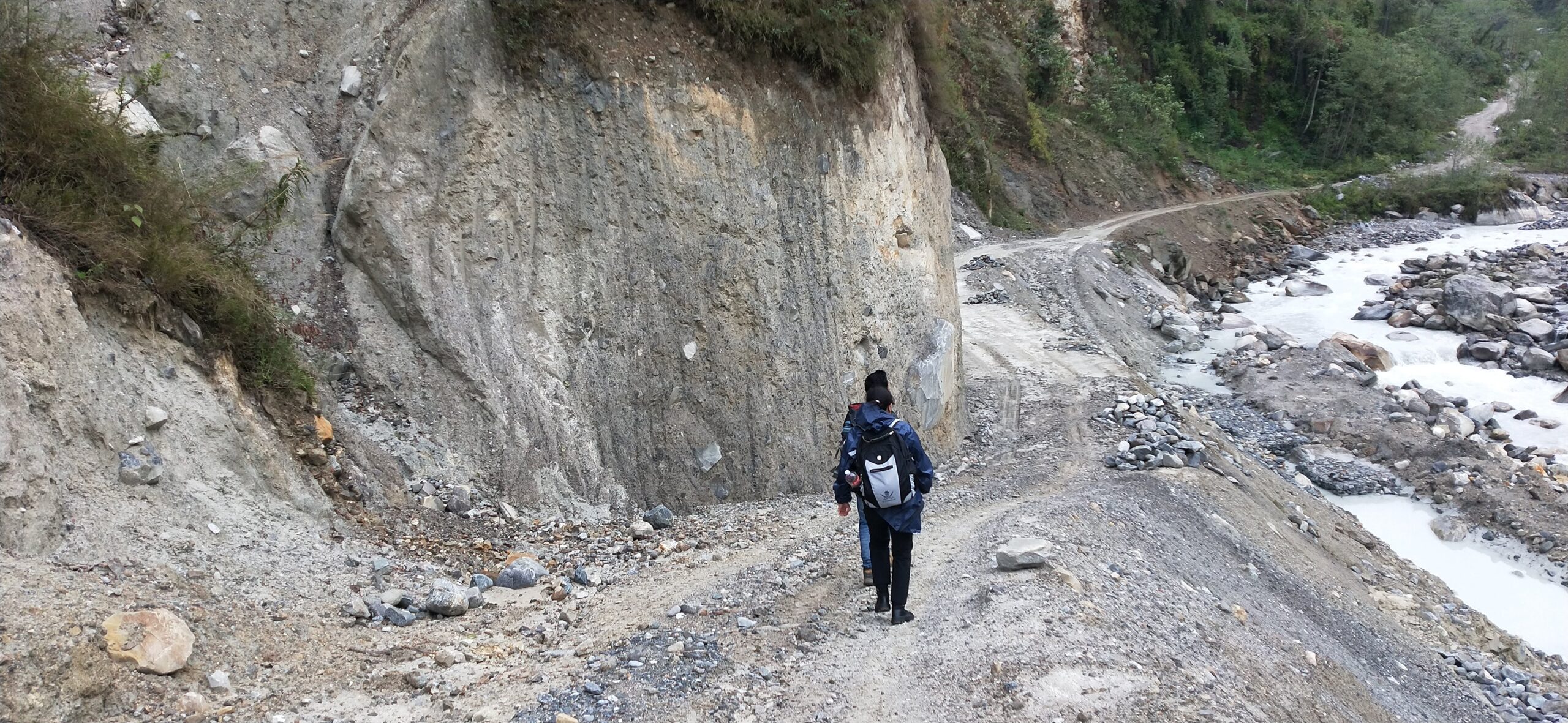
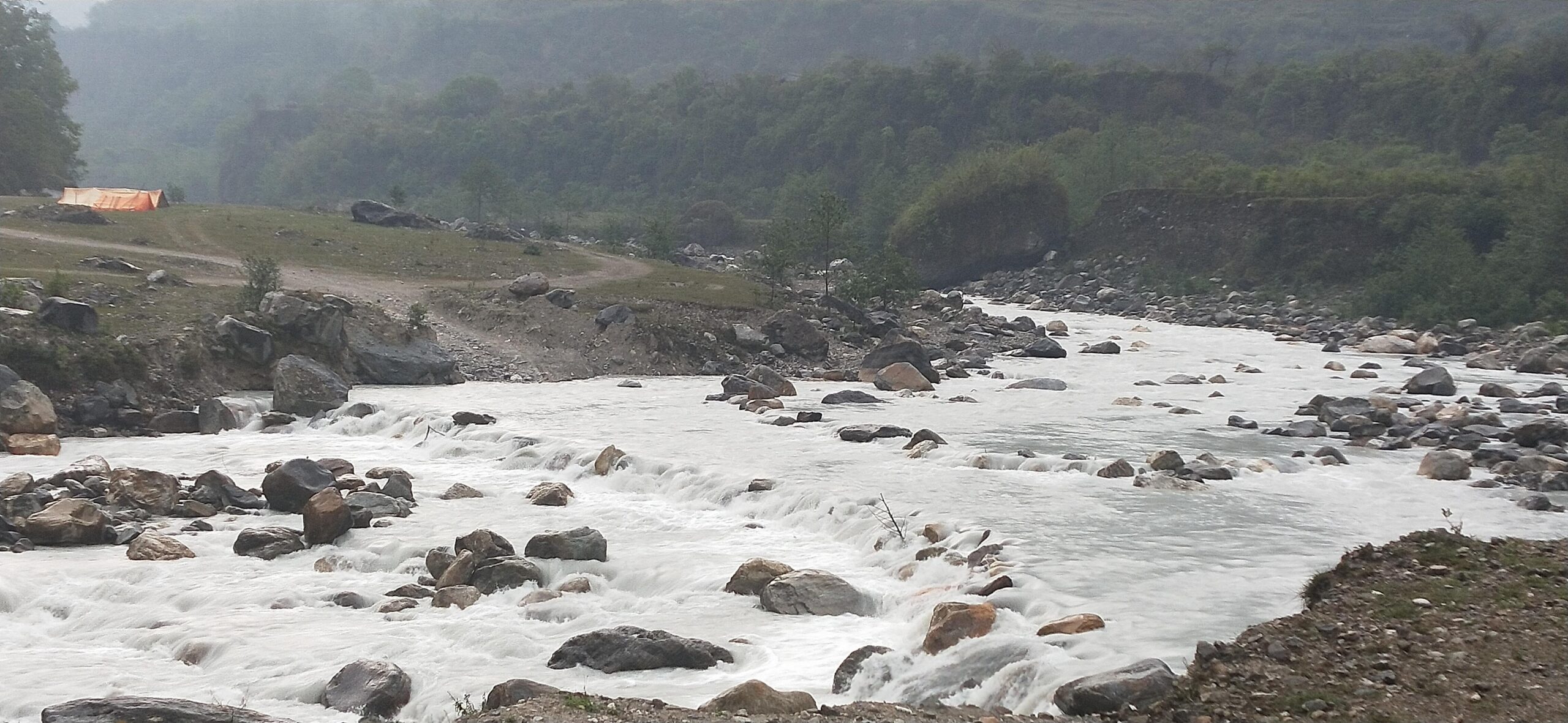
At that time, there were no access roads to the project area. That, however, was nothing unusual. Hydropower sites in Nepal are often located in rugged, unforgiving terrain – steep valleys, dense vegetation, and landscapes where even basic access is a challenge. Reaching the headworks required navigating narrow foot trails that would often disappear without warning. At several points, we had to descend steep slopes using makeshift wooden ladders, cross the river, and climb up the opposite bank.
After more than a decade in the hydropower sector, I was well accustomed to such conditions. Difficult terrain, lack of access, and physical hardship are part of the profession. In fact, any site with easier access often feels like a luxury. Many times, we find ourselves walking through places where it feels like no human has ever set foot before.
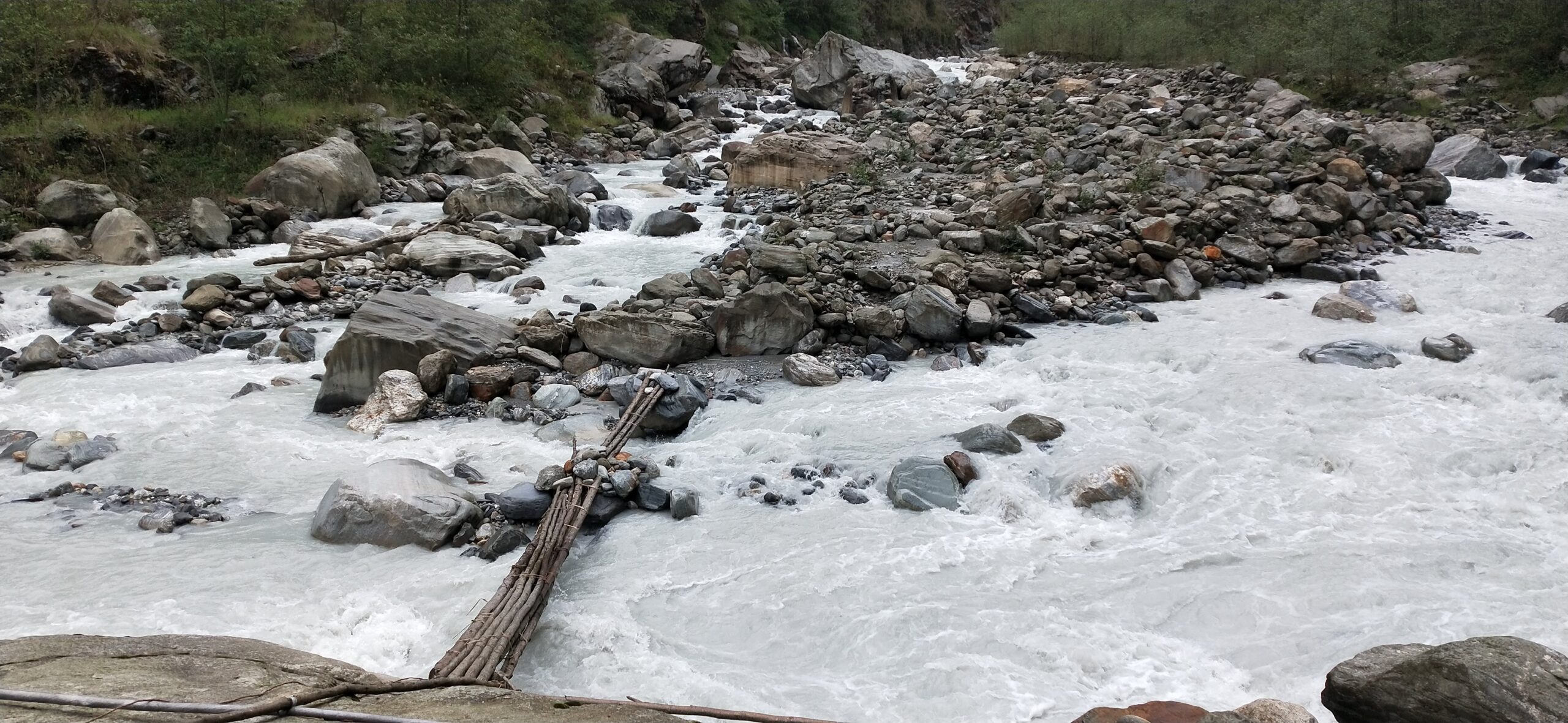
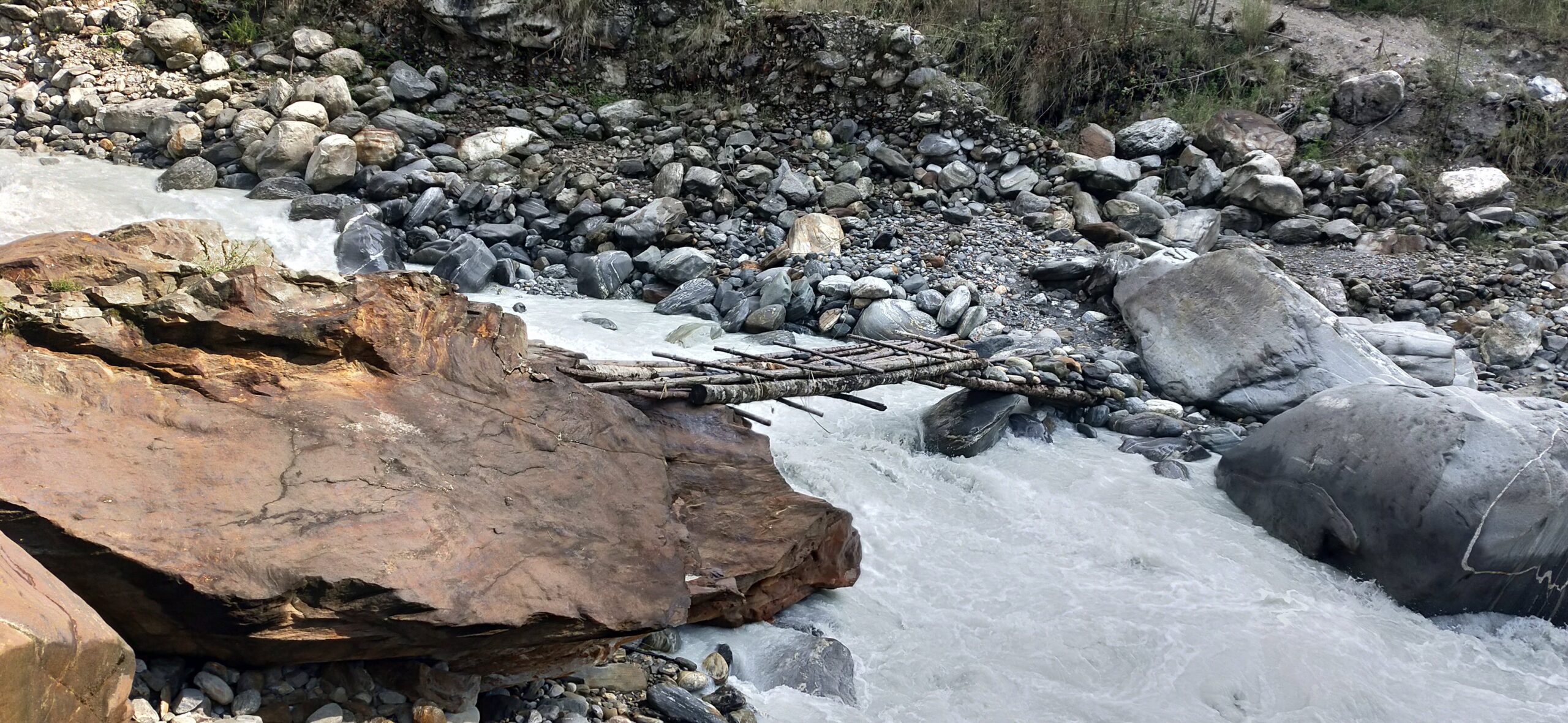
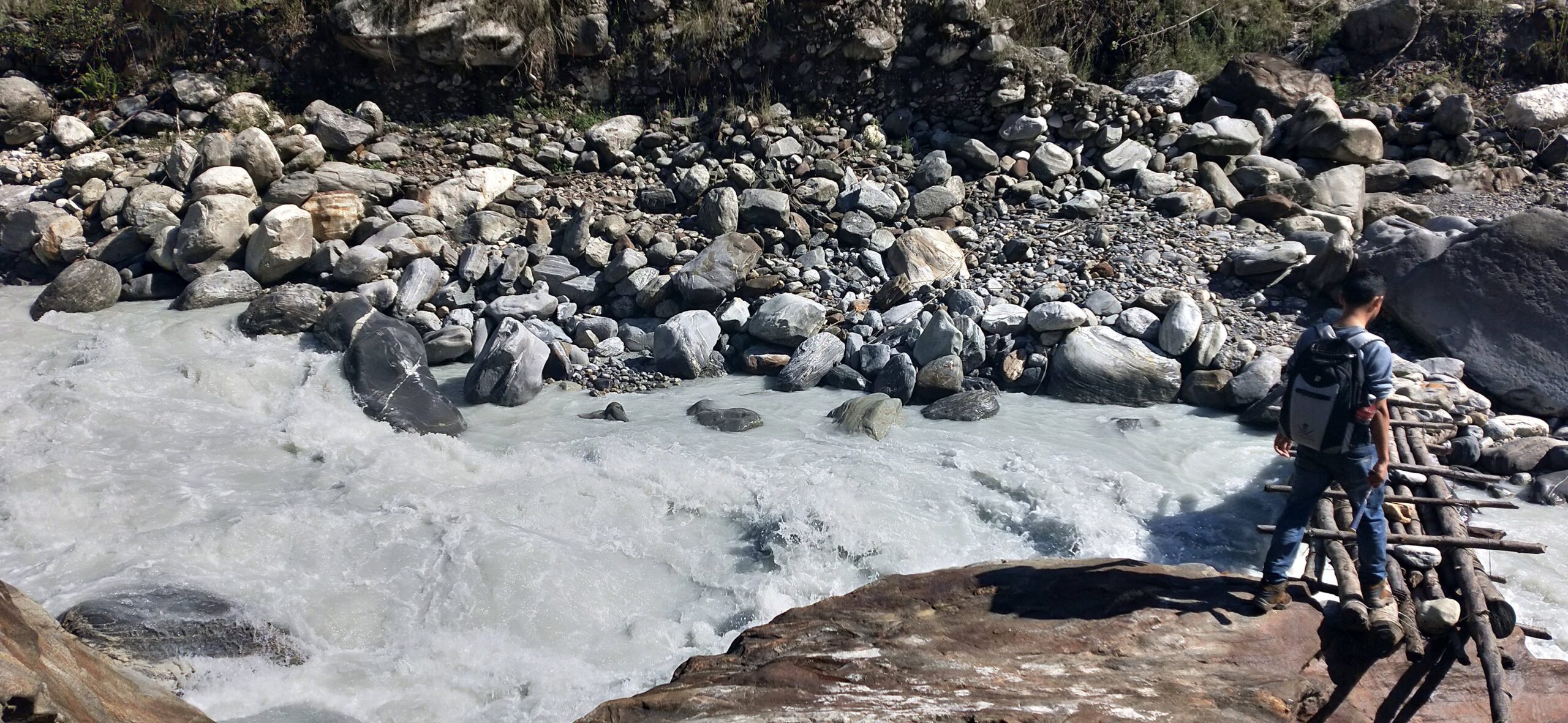
Upper Seti was no exception. The river here is steep, fast-flowing, and intimidating. To facilitate our movement, skilled local villagers had constructed temporary log bridges typically four long tree trunks tied together and fixed across narrow sections of the river gorge. Crude as they were, they had served us well. Just the day before, we had crossed at least ten such bridges without incident. On the day of the accident, only four crossings stood between us and the opposite bank.
I wear prescription glasses and have always been cautious around heights. Descending steep slopes is where I take extra care. Ironically, crossing those log bridges had never been particularly difficult for me.
But that day, something went wrong.
Maybe it was a momentary lapse in concentration. Maybe the logs were slippery. Maybe my boots had lost grip. Maybe it was hesitation or overconfidence. Or perhaps all of these combined.
I slipped.
In an instant, I was in the river.
The force of the current was overwhelming. I am not a strong swimmer, but instinctively I tried to align myself with the flow. It didn’t help. The river dragged me down repeatedly, refusing to let me stay afloat. I realized quickly that struggling against such a current would only drain what little energy I had.
I tried to grab onto boulders, but they were slick and unforgiving. I was being carried downstream helpless, suspended between panic and resignation. Strangely, I did not lose consciousness. I was acutely aware of everything. And in that terrifying clarity, my thoughts turned to my parents… and to my wife, with whom I had just begun a new chapter of life.
Then, suddenly, my hands wedged into a narrow crevice between two submerged boulders. My feet found no ground, I was still floating but I was stuck. It was a fragile hold. The rocks were slippery, and I could feel my grip weakening.
In front of me was a larger boulder. I told myself that if I lost this hold, I would try for that one, my last chance.
I don’t know how long I remained like that, clinging between life and death.
Then I saw a familiar face, my colleague standing on the riverbank. I wanted to shout for help, but no sound came out. I tried again and again, until with whatever strength I had left, I forced out a single word:
“Bachau!” (Save me.)
Within moments, villagers gathered at the scene. Yet the river was too dangerous no one dared to jump in. Instead, they acted swiftly and decisively. A long tree was cut and extended toward me. I managed to grab it, and slowly, they pulled me to safety.
Once on the bank, drenched and shaken, my first question was oddly practical: “Which side am I on?”
To my dismay, I was still on the wrong side of the river. I would have to cross those same log bridges again to return to camp.
The region is among the wettest in the country. It feels as though even raising your voice might trigger rainfall. It had rained in the preceding days, so I was wearing an oversized waterproof jacket, under which I had tucked a small bag containing essential field equipment GPS, compass, camera, some cash, and my phone.
The river took it all.
The current was so powerful that it ripped the bag away instantly. In hindsight, that oversized jacket may have helped me stay afloat, however briefly.
We were a team of four two civil engineers and two geologists. The accident occurred on the final day of our trip. We had planned to visit the surge tank area, a location previously unexplored by our team. Like always, reaching it required crossing the Seti River over those temporary log bridges.
By evening, we made it back to Pokhara.
I still don’t fully understand how I survived that day. The river could have swallowed me without a trace. The locals later told me that even strong swimmers have lost their lives in those waters.
If those villagers had not been there at that exact moment, this story would never have been told.