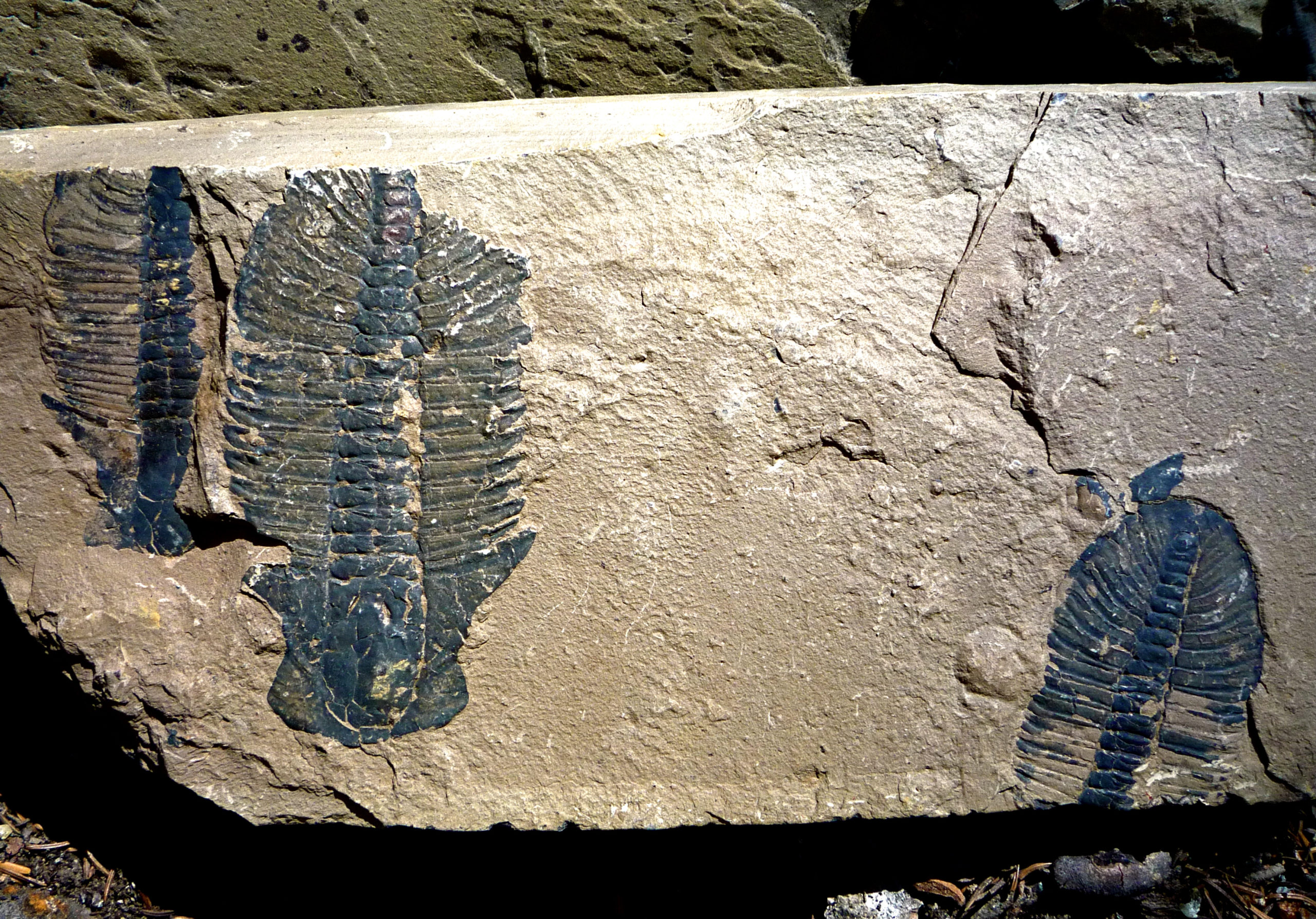
The Cambrian Explosion refers to a relatively short period in geologic time (around 541–530 million years ago) during which most major animal phyla (body plans) suddenly appeared in the fossil record. Before this, life was predominantly simple, single-celled, or small, soft-bodied multicellular organisms. After it, nearly all the basic architectures of modern animal life from arthropods to chordates (the group including vertebrates) were established.
It’s called an explosion because, in geological terms, the diversification happened rapidly, over roughly 20–25 million years, which is less than 5% of Earth’s total history.

Key Characteristics of the Explosion
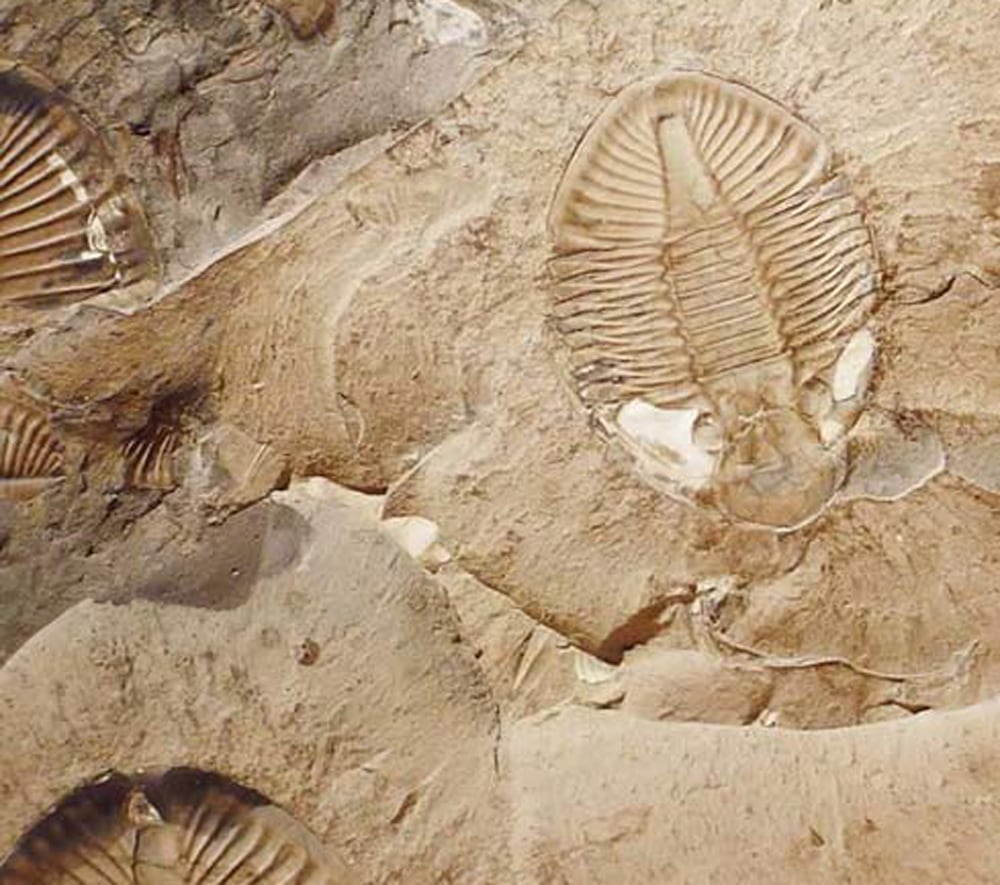
- Appearance of Hard Parts: The most dramatic change was the evolution of shells, spines, and exoskeletons made of calcium carbonate, calcium phosphate, or silica. These hard parts fossilized easily, creating the sudden abundance of fossils we see in rocks from this time (e.g., trilobites).
- Rise of Most Animal Phyla: Fossils from this period (especially the Burgess Shale in Canada) show soft-bodied and lightly armored creatures representing over 20 distinct animal phyla, including:
- Arthropoda (trilobites, early crustaceans)
- Brachiopoda (lamp shells)
- Mollusca (early snails, mollusks)
- Echinodermata (early crinoids and sea stars)
- Chordata (early relatives of vertebrates, like Pikaia)
- Radical Increase in Complexity and Size: Life transitioned from microscopic, simple forms (millimeters) to complex, macroscopic organisms (centimeters to tens of centimeters) with specialized organs.
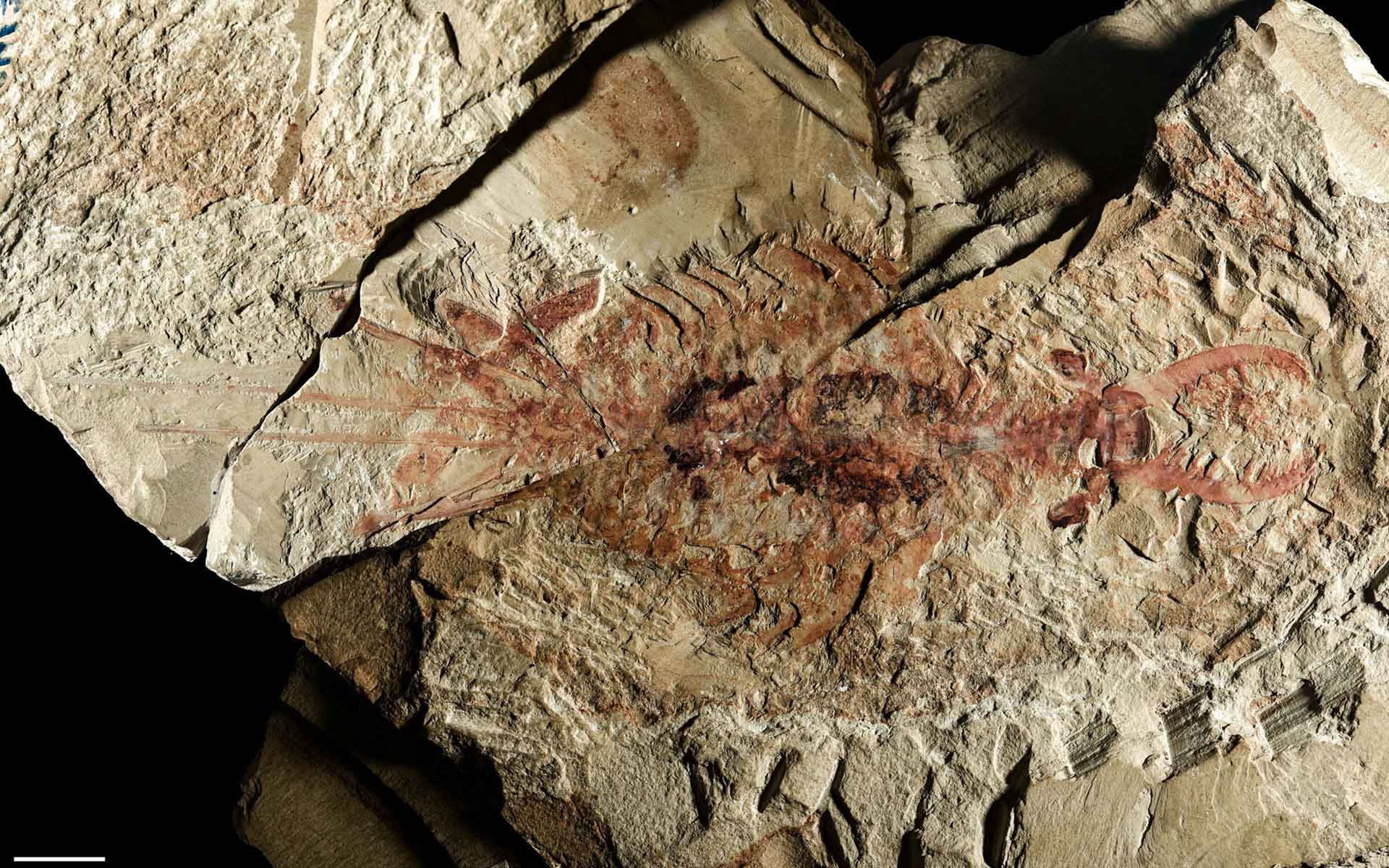
- Origin of Predation and Defense: The first clear evidence of active predation appears (e.g., the large apex predator Anomalocaris). In response, prey evolved defensive strategies like burrowing, swimming, and developing armor, triggering an evolutionary arms race.
What Came Before?
To understand the explosion, we must understand what preceded it for over 3 billion years:
- Prokaryotes (Bacteria/Archaea): Dominated for ~2 billion years.
- Eukaryotes (Complex cells): Appeared ~1.8 billion years ago.
- Ediacaran Biota (575–541 mya): Strange, soft-bodied, quilted or frond-like organisms (e.g., Dickinsonia). They were mostly passive, sessile, and likely filter-feeders or absorbers. They were NOT ancestors of most modern animals, they represent a failed or ancestral experiment.
Likely Causes
No single cause explains the explosion; it was a confluence of geological, chemical, and biological factors:
- Rise of Atmospheric Oxygen: After a long stasis, oxygen levels rose significantly in the late Precambrian. Higher oxygen allowed:
- Larger body sizes (oxygen supports metabolism).
- Synthesis of collagen and other proteins needed for complex tissues.
- More energetic lifestyles, including predation.
- Evolution of Predation: This is a major driver. Once animals could eat other animals, natural selection intensified enormously. Prey had to evolve faster, burrow, swim, or develop shells. Predators got bigger, sharper, and faster. This “arms race” accelerated evolution.
- Genetic Innovations: Evolution of key genetic toolkits (Hox genes) allowed for complex body plans. Hox genes are master switches that determine where limbs, eyes, and segments go along the body axis. Their duplication and diversification enabled a vast array of forms to evolve from a simple worm-like ancestor.
- Environmental Triggers:
- End of “Snowball Earth” (~635 mya): Massive glaciation ended, followed by climate warming, nutrient runoff, and new shallow marine habitats.
- Rise of Sea Levels: Flooded continental shelves, creating vast, nutrient-rich shallow seas—perfect laboratories for evolution.
- Changes in Ocean Chemistry: Increased calcium and other minerals made biomineralization (shells, skeletons) easier. A shell is not just for defense; it also allows muscle attachment and habitat expansion.
Key Fossil Sites
- Burgess Shale (Canada, ~508 mya): Preserves soft tissues (guts, eyes, gills) of bizarre Cambrian creatures like Opabinia (five eyes, a clawed proboscis) and Hallucigenia (walking on spines). Reveals the true anatomical diversity.
- Chengjiang Lagerstätte (China, ~518 mya): Slightly older than Burgess, preserving even earlier soft-bodied animals, including Myllokunmingia, one of the earliest fish-like chordates.
- Sirius Passet (Greenland): Also ~518 mya, shows early arthropod and worm diversity.
Common Misconceptions
- It was NOT the “origin of life.” Life existed for ~3.5 billion years before the Cambrian.
- It was NOT a sudden, worldwide event in a few thousand years. It lasted tens of millions of years, fast in geology, but slow by human standards.
- All phyla did NOT appear at once. Sponges and cnidarians (jellyfish) appeared well before the Cambrian. The explosion primarily involved bilaterian animals (those with two-sided symmetry).
Why Is It So Important?
- Sets the Stage for All Future Life: Every complex animal alive today, from insects to humans, is built on a body plan first established in the Cambrian.
- Demonstrates the Power of Evolution: It is the best example of how ecological interactions (predator-prey, competition) can drive rapid diversification.
- Establishes Modern Ecosystems: Before the Cambrian, there were no predators, no grazers, no burrowers. The explosion created the first complex food webs and animal-dominated ecosystems.
A Final, Remarkable Fact
If we compressed Earth’s 4.5-billion-year history into a single year:
- Life appears in March (single-celled microbes).
- Multicellular life evolves in October (Ediacaran biota).
- The Cambrian Explosion happens around November 19–23, five days of dramatic innovation.
- Humans appear only in the last 5 minutes of December 31st.
The Cambrian Explosion was the moment when the animal kingdom, as we know it, truly began.