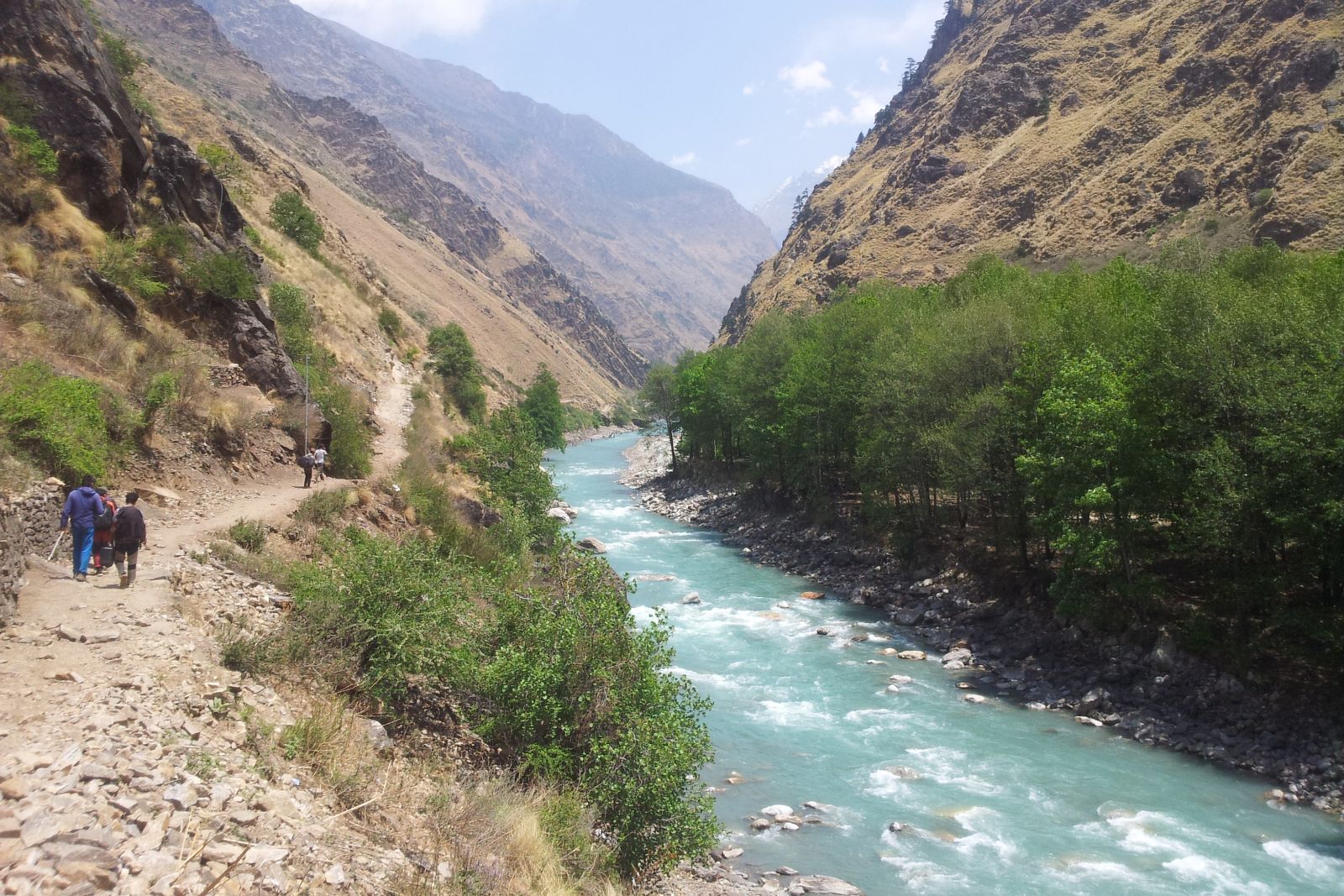
Mugu village, nestled along the majestic Mugu River in the remote northernmost part of Mugu district at an elevation of 3,500 m, is home to over 200 households.
The village, surrounded by stunning natural beauty, is incredibly isolated, requiring a two-day walk from the nearest road to reach, and another additional day to reach from the district headquarters, Gamgadhi.
We travelled there to install automatic hydro-meteorological station to study hydroelectric project to be constructed some 10 km downstream.
The village is primarily a Buddhist settlement, and as part of their customs, they prohibit hunting and fishing in the area, making it a haven for local wildlife.
Despite its isolation, the village has its own police station, a primary school, and even a customs office, as it lies close to the border with China.
In the past, villagers relied heavily on Chinese border towns for essential goods, but since the pandemic, the border has been closed. Now, they have to transport their supplies from Gamgadhi using mules, which has made living in the village even more expensive.
The situation has worsened with ongoing road excavation work, forcing the mules to take a longer, alternative route, adding an extra day to the journey.
Despite these challenges, the people of Mugu village remain warm, welcoming, and resilient. We were struck by their hospitality, enjoying delicious meals at prices lower than those in Gamgadhi, and sleeping in cozy rooms that far surpassed the accommodations at the district headquarters.
A unique aspect of Mugu village is its winter migration.
As the bitter cold sets in, the entire population, except for the local monastery’s priest and his family, leaves for warmer areas, abandoning the village for nearly five months.
We witnessed this mass migration firsthand, as families packed everything from bedding to utensils, even bringing their pet dogs along on their backs or loaded onto hired mules.
The reason for this seasonal exodus is simple: the homes lack adequate heating. Though the village is powered by a local hydropower plant, it frequently breaks down due to a lack of spare parts and proper maintenance, leaving the community without a reliable energy source to get through the freezing winter months.
Nepal, with one of the lowest per capita energy consumption rates in the world, faces significant energy poverty, and Mugu is a prime example of this struggle.
If sustainable energy solutions were introduced to help heat the homes in this remote village, it could reduce the need for costly seasonal migration and improve the quality of life for these economically disadvantaged communities.
By providing reliable energy access, we could promote stability, growth, and opportunity in places like Mugu, which are often left behind in Nepal’s broader development agenda.